


Saborsko and Licka Jasenica

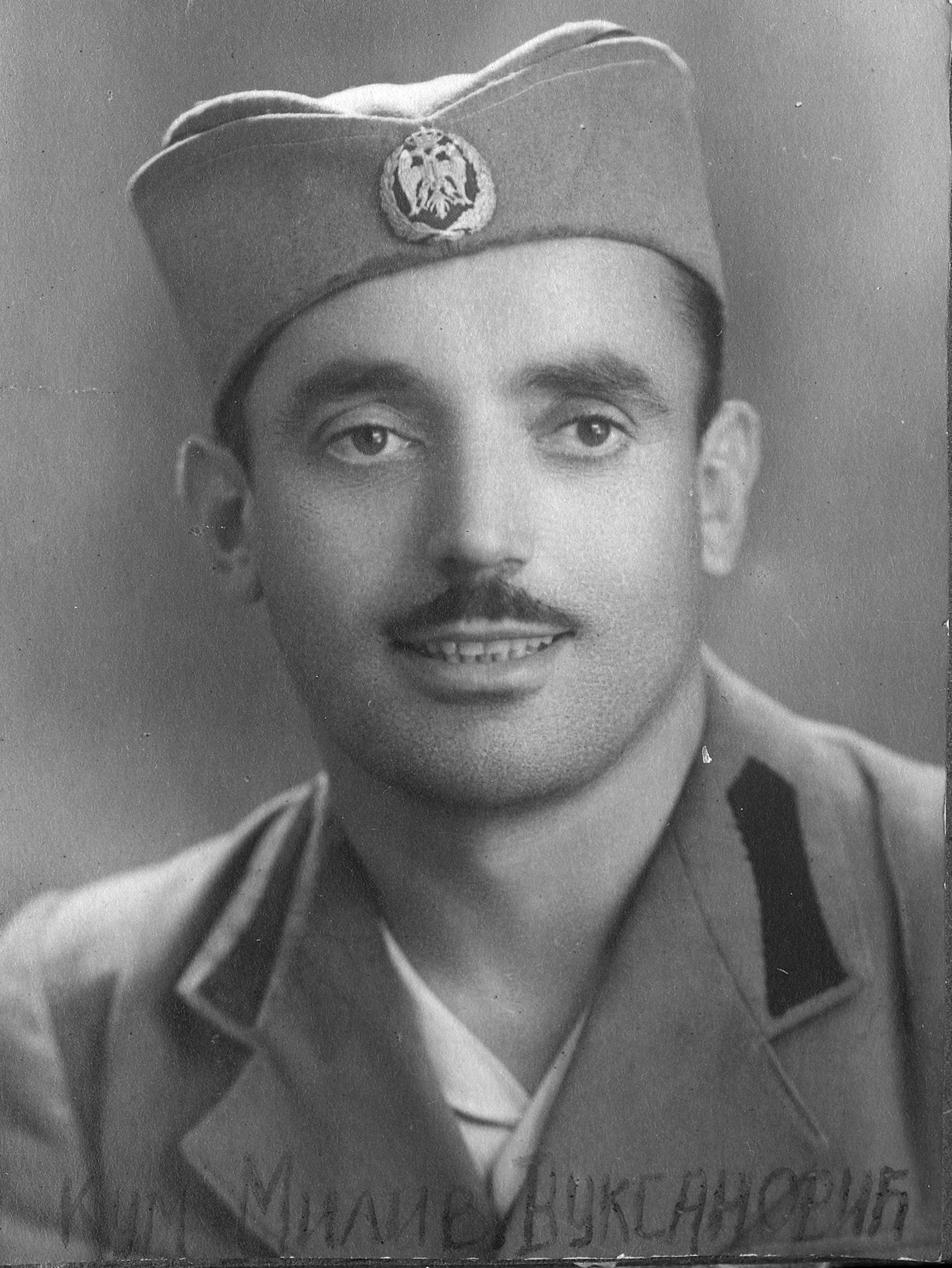
Milivoj Vuksanovic
Comparing the Serbian village of Licka Jesenica with the Croatian village of Saborsko, one can see and evaluate the work of the partisans, whose goal was the destruction of the Serbian people. Such was the contrast between the Serbian and Croatian villages throughout Croatia
By Major Milivoje VUKSANOVIC
On the morning of December 14, Vojvoda Djujic and the corps commanders arrived for a meeting to discuss our further movement. It was decided that we would resume at 10 am, with the combat units arranged as before.
There remained the difficult question regarding our seriously wounded. They were not able to ride horses, and carrying them in this snowy and icy weather was not feasible. Leaving them behind was not an option. We consulted with their families and elders, but no good solution could be found. One of the men told me that among the home guards, who were located about two or three kilometers from Dreznik, was a noncommissioned officer who claimed to know me from our pre-war military service. A thought occurred to me that I should contact him to explore the possibility of him being able to help us in regard to the wounded. I sent a local villager to invite him.
He arrived a short while later. I recognized him. I remembered him as an excellent NCO. He was pale and trembling. I explained our situation to him and asked him if he could help us. He said that he could and that he would. He gave me his word that he would personally take care of them and would arrange for the transfer of the wounded to Slovenia, which is what we had requested. It seemed to me that he was very happy to do us this favor, although I didn’t really believe him, but nevertheless warmly thanked him, promising that if we remain alive and ever meet, that I would never forget his kindness. The families of the wounded agreed to this proposal, though without much hope of success. There was no alternative.
Indeed, a short time after our arrival in the Croatian littoral, north of Susak, I received a report from the headquarters of the Volunteer Corps in Postojna that our wounded had arrived safely and had been put in their hospital. They were eventually healed and returned to us. Today they are all living in exile, healthy and happy. This Homeguard NCO had proven to be an honorable man who had kept his word, and I am eternally grateful to him.
We resumed our movement in the following combat deployment: The Maric and Petrovac detachments moved in the direction of Dreznik-Catrnja-Korita-Uvala-Saborsko; the fourth brigade along the right line and the third brigade along the left. All other units remained with the main body.
The weather was cloudy with patchy fog and a dry snow was falling. As we neared the village of Catrnja, we were greeted by heavy fire from the partisans. Our lead units attacked the partisans and occupied the village. The partisans withdrew to the village of Korita and, from the edge of the forest above the village, opened a withering fire across the open space in front of the village. Our first few attempts at a counter- attack were repelled. I ordered that all of our automatic weapons be brought to the scene. As soon as they arrived, I had them placed in positions from which they could cover our attack. Over one hundred automatic weapons began firing at once, raking the partisan positions. The partisan fire began to wane, and our lead units advanced on the enemy positions. Finally, they stormed the village and the partisans began to flee in panic and fear. Many were cut down and were left lying where they fell, while the rest saved themselves by running into the woods around Kapela. We only had a few wounded. There were 28 partisan dead. I directed that their corpses be laid beside the road, so that both our military units and the refugees would see them and thus have their spirit and morale lifted.
As we approached Kapela, the road to the top of the village was narrow, steep and very difficult to climb. The road widened at the top. The forest was thick and made up of huge fir and beech trees, which were covered in a thick blanket of snow. The branches intersecting above the road make it seem as though we were passing through a white crystalline tunnel.
Our lead elements were moving quickly, but the trailing groups can barely keep up. The fighters were able to move fairly well, but not so the refugees, who were poorly clothed, and in many cases, barefoot. Those who had shoes were unable to put them on, as they had shrunk after becoming wet. Many had wrapped their feet and legs in rags, so they look like they’re wearing snow shoes. Some refugees had open sores on their feet. Children cry, as do their mothers who are holding them in their arms or carrying them on their backs. But regardless, they all move as fast as they can with the Chetniks helping them.
A school superintendent named Voja has his feet wrapped in burlap sacks, making them look like stumps. Rada Degoricija and Nastasia Zavoric look even worse. Mrs. Raseta, who is 80 years old, is barely moving, leaning on a cane and on her grandchildren who are holding her up. She constantly stops to rest.
Our forward military units had moved through Kapela before nightfall, while the conditions were still good. However, the other units of the Division who passed during the remainder of the night suffered through terrible conditions. They were fatigued, freezing, and fearful of falling behind or getting separated from the main body of the column, thus giving the partisans an opportunity to attack them. All of these things combined to sap their strength. The column was no longer unbroken, as some elements became separated. We communicated through the use of flares. The light from the flares exploding overhead, seen through the snow crystals, created a magnificent sight, albeit one that did not enchant. Besides, we feared that the light from the flares would give away our position.
I entered Saborsko with the forward elements of our column. It’s a large town and the houses were all intact. I decided to proceed with my corps to Licka Jesenica, and have all of the other units spend the night here in Saborsko. I left a courier with orders for the units who were following, and I continued on. It was about 4 or 5 kilometers to Jesenica and this path looked harder and longer to me than the entire route from Dreznik to this point.
There was a group of partisans in Jesenica who welcomed us with gunfire, but they quickly dispersed when we entered the village. After completing arrangements regarding lodging and security, l went into the house that I had designated as our headquarters, where, next to a roaring fire, I was finally able to get warm and dry.
Licka Jesenica is quite a big place, with a purely Serbian majority. It is situated in a bay, surrounded on all sides by hills. It is a Chetnik village, which was terrorized by the partisans in 1942. The partisans killed over a hundred Chetniks from this village. Many homes were deserted and shrouded in black. The people greeted us happily, especially since we had a number of surviving Chetniks from this village in our ranks. We stayed there for one day to rest.
As opposed to Licka Jesenica, Saborsko is a large and rich Croatian village. It is interesting to note that all of the farmers were either ustase or partisans. The village was intact and seemed at peace. The farms were full of livestock. In the attics we can see smoked meat and bacon hanging. The people were well dressed, with chests and boxes full of various clothing. Comparing the Serbian village of Licka Jesenica with the Croatian village of Saborsko, one can see and evaluate the work of the partisans, whose goal was the destruction of the Serbian people. Such was the contrast between the Serbian and Croatian villages throughout Croatia.
All we asked of the population of Saborsko was to provide us with shelter and to feed us for the one day of our time there. I think their hospitality must have been “genuine”, because after leaving Saborsko, I heard how some individuals were reciting the following ironic verse : “No smaller village, no nicer welcome from Saborsko, they all cried for us as we were leaving”.
Let these few lines of memories recounting the difficult and bloody days of our departure from our homeland, serve as votive candles honoring the memory of our warriors who laid down their lives on the path of our Golgotha.
Milivoje Vuksanovic
Escondido, California 1964
Translated by: Velimir Cvjeticanin



